
Can Bee Hotels Help in Clerkenwell?
By Ronan Sidnell for Clerkenwell Pollinator Path
A bee hotel is a structure made for solitary bees to nest in and complete their life cycles. They are useful especially in urban areas where natural nesting materials may be in short supply.
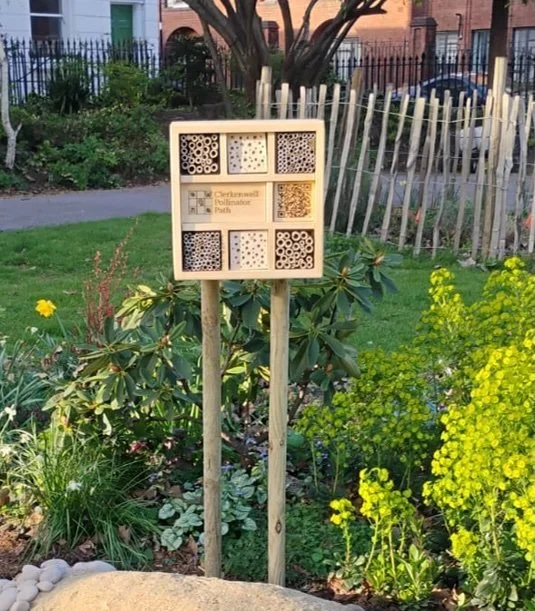
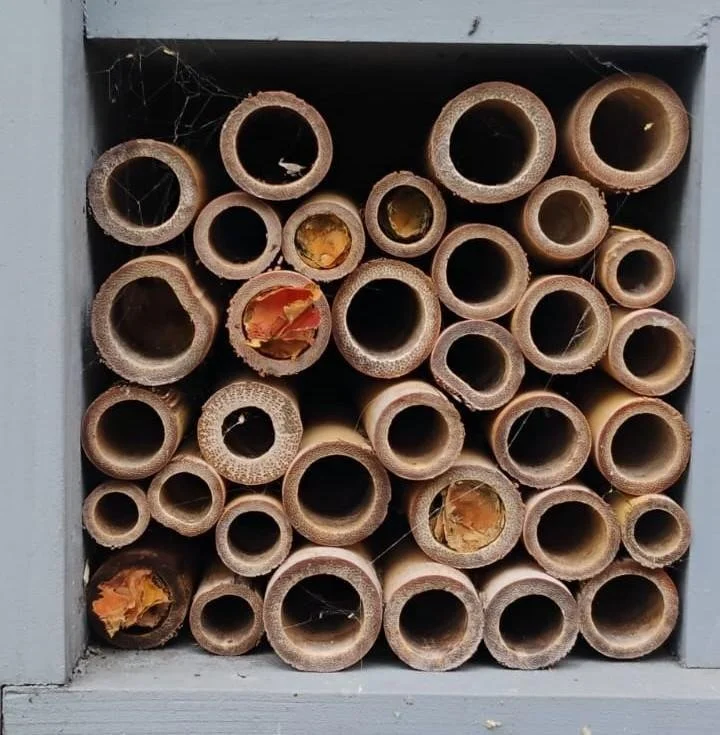
The bee hotels installed along the Clerkenwell Pollinator Path (CPP) are made of untreated pine (see above) and are intended to last for at least 5 years. Untreated wood is a good material because it mimics the natural cavities in tree trunks and plant stems that bees would often select as nesting spots. Cavities made from bamboo, cardboard, and holes drilled into wood blocks inside the bee hotel provide space for many different bee broods.
The logo on the bee hotel helps to raise awareness for the Clerkenwell Pollinator Path which includes various community outreach and engagement projects, and the QR code allows visitors to the parks to follow CPP on social media and see which community events are coming up.
The CPP bee hotels contain cavities of different diameters (3-8mm). Different bee species will select different diameter cavities to lay their eggs in, depending on their body sizes. Resin bees, yellow-faced bees and scissor bees – some of our smallest native species – will use the smallest diameters for their nests, while large species such as mason bees and leafcutter bees will use the largest cavities. The depth of the cavities (13cm) gives space for each female bee to lay a number of eggs in one tube (around 6-12) which means her reproductive output can be equivalent to a bee nesting in a natural cavity. The CPP bee hotels have been installed so that they stand 1.2m above the ground. This is important in keeping the bee broods safe from disturbance from animals such as foxes, cats and dogs, and to prevent flooding.
Which bees use them?
Cavity-nesting solitary bees use bee hotels to lay their eggs in and complete their life cycles. Most of the UK’s native bees are solitary, meaning they do not live together in hives and do not make wax or honey. Instead, males and females mate and then the female bee chooses a place to lay her eggs. Female bees will then build nests out of various materials including mud, leaves, petals, plant fibres or resin.
Some solitary bees make a nest by tunnelling underground. Bee hotels are for solitary bees which like to nest above ground.
Which cavity-nesting bees might use the CPP bee hotel?
Several species of bee are likely to use the bee hotel. These include:
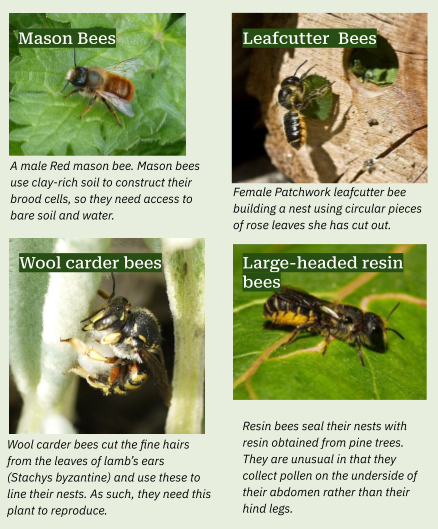
From the outside, you will be able to tell a bee has made a nest in a bee hotel if the cavities are sealed up at the ends with mud or plant materials.
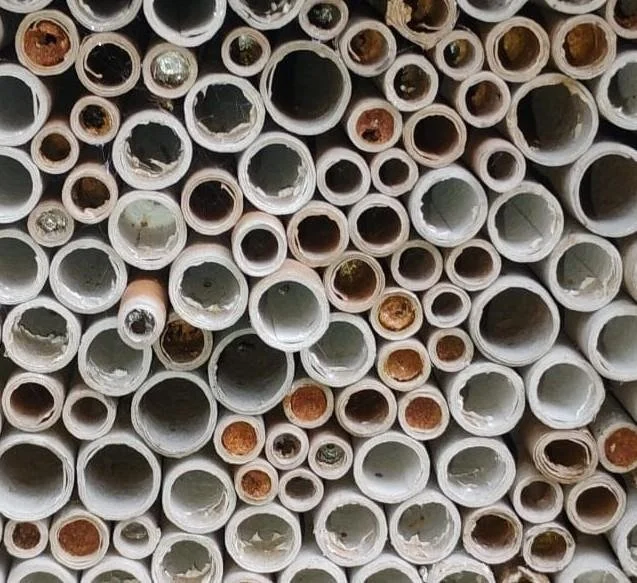
Nests made by red mason bees and other mason bees are sealed with mud. The mud caps often have a reddish appearance (see left) but this can fade in the sun to a dull brown (see below).
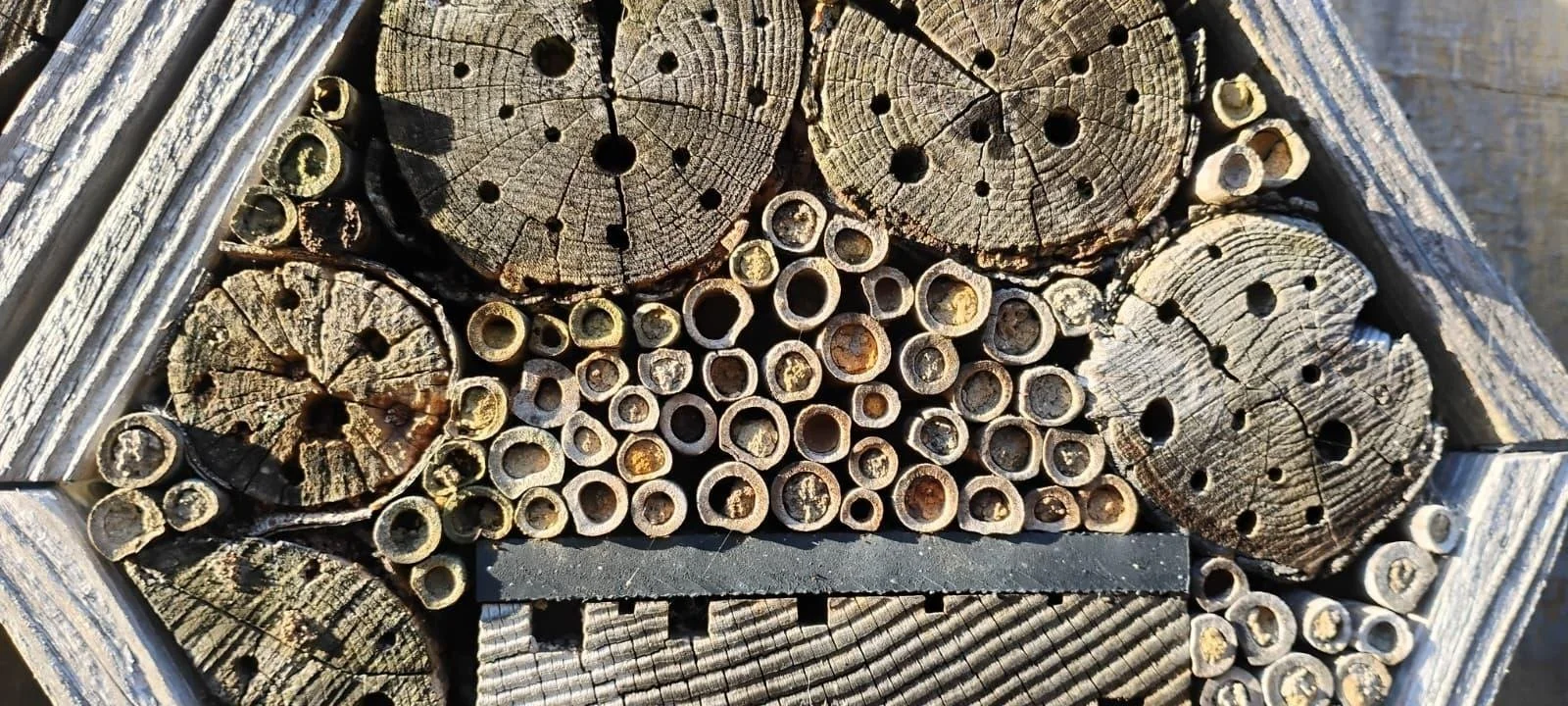
Leafcutter bee nests are sealed with circular pieces of rose leaves. When the nests are freshly made the leaves will be green but as the season progresses they will dry out and turn brown (see below).
Inside the cavity, the female has laid a series of eggs in separate chambers called brood cells. Each egg is given a store of pollen and nectar to eat. The egg hatches and the baby bee goes through all the phases of larval development. It then pupates and goes through metamorphosis (in the same way that butterflies do). The adult bees emerge from the nest the following spring, and the life cycle starts again with the new bees mating in the spring and summer months.
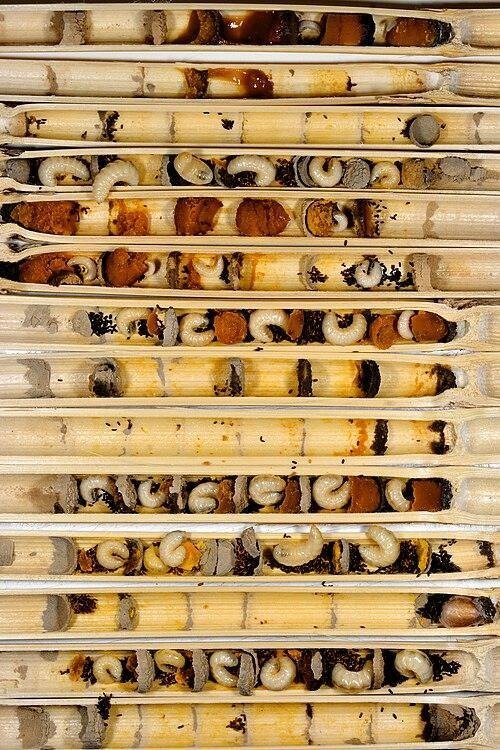
A cross-section of a red mason bee nest (Osmia bicornis) with bee larvae in their individual brood cells. The orange material in each cell is the pollen and nectar mixture that the mother bee has placed there for them to eat.
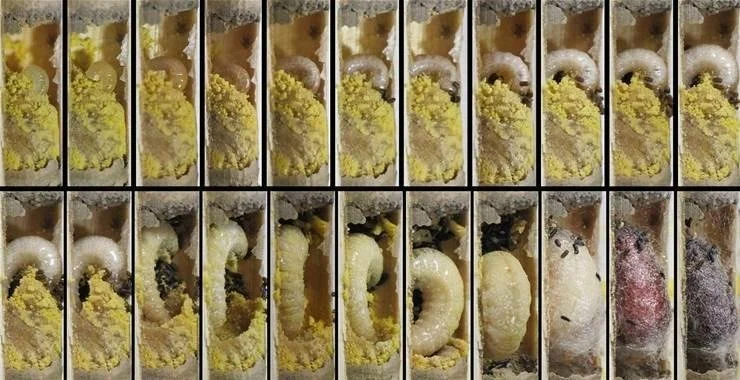
A series of photos of one bee brood cell showing how a bee larva develops. The bottom right photos show the bee pupating.
In early July 2026, pollinator ecologists recorded capped nesting tubes in the Spa Fields bee hotel, which were identified as Heriades truncorum (large headed resin bee) nesting tubes.
Why are solitary bees important?
Solitary bees make up the majority of our native bee diversity, and they are essential pollinators of wild ecosystems as well as pollinating many of our crops, such as apple trees. Like many of our insect species, they are struggling to cope with the changes we have made to their natural habitat through urbanisation and farming.
How can we help bees?
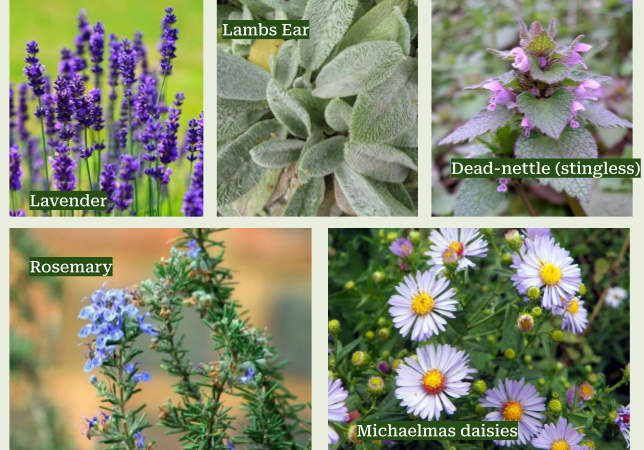
Bees eat pollen and nectar, so they need a steady supply of flowers from Spring until Autumn. Plants which bloom at different times of year help bees to always have something to eat. They also need places to nest (like bee hotels, hollow plant stems like pond reeds and brambles, dead tree trunks, or patches of ground that are left wild and undisturbed). A neat grass lawn may seem like a lovely green space, but if there are no flowers it gives bees nothing to eat. Grass which has been allowed to grow taller and has wildflowers sprinkled into it is much better habitat. The Clerkenwell Pollinator Toolkit has more information on which plants to grow to help bees and other pollinating insects.
Different bee species like different flowers, but some good plants for bees in general are:
How do we maintain bee hotels?
Bee hotels should be placed so that they face South and tilted forward slightly so that rainwater does not pool inside. The cavities inside bee hotels should be removed and replaced when they get waterlogged. You can also take the cavities with bee nests in them into the house for the winter, storing them in a cool, dry place and taking them outside so that they can emerge in the spring (from late February onwards). The cavities can be cleaned out once the bees have emerged and replaced in the bee hotel. Cleaning out the debris from previous nests helps the next generation of bees to use them without fungi or bacteria building up.
Supporting ground-nesting bees can be done by leaving a patch of ground as bare as possible and making sure it is not disturbed (walked on by people or pets). If you have access to sandy soil or can make sandy loam using sand and gravel, building a mound of this in a south-facing spot and keeping it free of plants is a great way to give ground-nesting solitary bees a place to build nests and shelter. See the Bee Bank Guide for more information.
Where can I get a CPP bee hotel?
The Clerkenwell Pollinator Path bee hotels are created by Robin Dean, recommended by Pollinating London Together ecologists.
Email Robin at: redbeehive@btopenworld.com.