
Soil Testing in St John’s Garden
By Rosa Goddard
For the last few months, we have been testing the soil using the microBIOMETER® as well as testing most of the locations with a probe and carrying out eDNA sequencing through Nature Metrics. The soil is very important as it is a home for all our important plants, and it provides vital nutrients for them. The soil testing is important as it informs us about the soil health and helps us synthesise a plan to care for the soil.

MicroBIOMETER® testing kit
While most soil kits test for substances like phosphorus, nitrogen and potassium as well as the pH, microBIOMETER® focuses on the biology of the soil. It tests the microbial biomass of the soil and the fungal to bacterial ratio.
This is done by mixing the sample of the soil with extraction powder and placing a few drops on a testing card. This card is then scanned by the app which tells us the microbial biomass and the fungal to biomass
These factors are important to the soil as a high microbial biomass indicates active and fertile soil. This is because the microbes break down the organic matter into nutrients the plant can use. A high fungal to bacterial ratio can indicates stable carbon rich soil as the nutrient cycling happens rapidly as dead organic matter is broken down very quickly. These nutrients are very important to the growth of healthy plants.
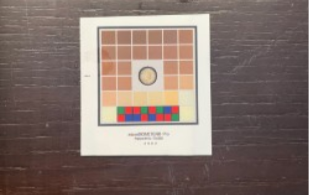
MicroBIOMETER®
The Soil Probe
The probe tests the moisture content, the pH, temperature and the light intensity. These factors are important in determining which area of the gardens we should priorities watering and which areas of the garden should have more attention. It also helps to provide a swift but accurate way to assess the conditions lying just under the surface such as pH and moisture levels.
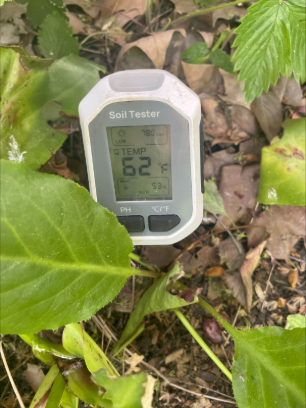
Soil Probe
eDNA Sequencing
Soil environmental DNA (eDNA) sequencing has been carried out in the garden. The eDNA refers to the genetic material shed by the organisms into their environment such as cells or waste products. This is an important and non-invasive way of testing which organisms have been in the soil. Scientists use molecular techniques to isolate the unique DNA sequences which correspond to different species.
Samples were collected from the soil and bought to a lab. The eDNA is extracted and methods are used to ensure that even the smallest traces of DNA are detectable. The scientists then order and match these fragments to match them with the sequences that are known to reveal the species identity.
This method is brilliant for determining the biodiversity in the soil and can provide a special insight into soil health. It also can show us what types of fungi, plants and animals that are in the soil and tells us about the diversity of microorganisms living in it.
Check back in soon for the results!